
All the news
23 03 2015
From March 24th to 26th, ICN2R and Microbia environnement, SMS partners, will lead a training on Nano biosensors for water monitoring.
March 24th will be dedicated to oral presentations on "general consideration on fabrication of nanobiosensors and releated platforms". The 2 other days will allow participants to get real in the lab.
External experts were invited to share their knowledge. Mrs Töbe from AWI, Mr Pittson from GWENT and Mr Geidel from Fraunhofer accepted our invitation and will join us for this 3 days training.
To learn more about the workshop click here.
17 02 2015
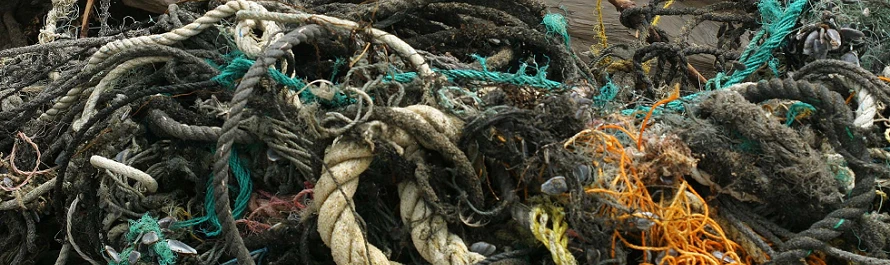
With more than one million bags used every minute, the impact of plastic waste on the marine environment is vast. Over the last ten years, more plastic has been produced than during the entire 20th century. Floating in every ocean of the world and rooted in the seabed, especially in coastal areas, plastic debris are invading our seas.
Plastic decays very slowly in the oceans, breaking into ever smaller fragments, also known as microplastic. In addition to have the ability to suffocate sea animals, once degraded into small pieces plastic waste produces micro particles which are ingested by marine life. A study made by the Wageningen University demonstrates that 94% of investigated stomachs of Dutch Fulmars contained one or more plastic particles and about 52% contained more than the critical level of 0.1 gram plastic.
Plastic waste is dangerous
Professor Richard Thompson from the Marine Biology and Ecology centre of Plymouth University underlined in an article that several chemicals that can be found within plastic material are then found in the marine environment as well. These materials were introduced in the plastic at the time of manufacture in order to achieve specific qualities (flexibility, flame retardants or anti-microbials).
Continue reading here
09 02 2015
During the last decades, the European Union (EU) witnessed the development of maritime activities such as:
- Maritime trade expansion,
- Use of underwater resources (oil, minerals),
- Use of fishery resources to meet the food challenge,
- Development of renewable energy systems offshore production,
- Establishment of intercontinental submarine cables,
-Economic development of coastal areas and their infrastructures
Read the entire Factsheet
30 01 2015
Latest "Science for Environment Policy" articles:
Pollution and overfishing are public’s biggest marine concerns
Is Britain’s biosecurity being threatened by therisk of an ‘invasional meltdown’?
Marine Protected Areas: how to improve community support?
Is it safe to eat the fish you caught yourself? Contamination of fish in the Czech Republic
Special issue: Coastal zones: achieving sustainable management
EFSA
Statement on the benefits of fish/seafood consumption compared to the risks of methylmercury in fish/seafood
European Commission
The Maritime Spatial Planning directive leaflet
The new Common Fisheries Policy: sustainability in depth
Joint Research Center
Using less fish to test chemicals safety
Others
ICES launches call for abstracts
18 12 2014
Seas and oceans provide an essential part of our wealth and well-being and are a source of food, energy and resources. However, the impact of human activities on the marine environment is strongly increasing and research and innovation are crucial to support a thriving and sustainable maritime economy.
You can read our full press release here.
26 11 2014
By delivering a novel automated networked system that enable real-time in-situ monitoring of marine water chemical and ecological status in coastal areas by the detection of a series of contaminants, SMS safeguardes the future of the marine environment and the major implications it has for society. The pollutants specifically targeted by the project have been indicated as having priority for quality control of seawater. They cover a wide spectrum of regulated chemicals that have detrimental effects on the marine environment such as the algal toxins, the antifouling pesticides, flame retardants and pharmaceuticals that will be measured using innovative probes. The SMS project will promote the development of novel sensing devices for marine environmental protection. SMS is expected to have a major impact on marine water end-users and relevant stakeholders.
01 10 2014
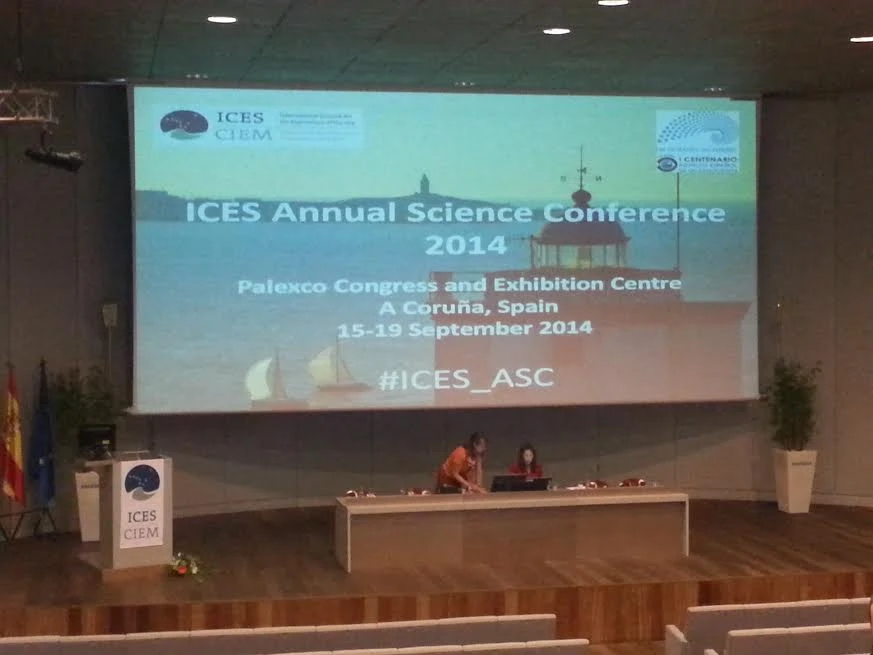
SMS attended the ICES Annual Science Conference from the 15th to the 19th September 2014.
The importance of making science understandable to decision-makers and the need to find a coordinated voice for science were the main messages of the opening lecture at ICES Annual Science Conference.
Find the press release of the event here
22 07 2014
Prof Palleschi, coordinator of SMS, was interviewed by Alan Archer-Boyd.
Here is an abstract:
The project will try to help protect the marine environment while helping industry to make the best use of it (Blue Growth Strategy). How do you balance the (perhaps) conflicting demands of these sectors on the project?
Three SMEs involved in the project are making devices (Microbia, France), instruments and prototypes (Systea, Italy and Acromed, Sweden) to improve the existing instrumentation to monitor emerging marine pollutants in all oceans, including the coastal areas. So in my opinion there is not a conflicting demand because bothresearch groups and SMEs involved in the project are working to solve the same problems. As marine pollution increases, thanks to the use of novel biosensing
technologies, SMEs are helping the “sensorists" to make their devices working in complex matrices, and in real time.
How does this project differ from or expand on previous work?
Basically this project is expanding the previous work by using an improved biosensor developed in a previous project and adapted to work in real time and to monitor toxic algal species. Moreover, SMS will prepare new biosensors based on aptamers that
detect new pollutants in marine waters as biocidal compounds in antifouling paints (marine transport) – Flame Retardants – plastic components, pesticides, marine toxins, and pharmaceuticals as sulphonamide.
[...]
Read about the full interview here
23 04 2014
SMS attended the FAO Global Oceans Action Summit on the 22nd and 23rd 2014.
The Government of The Netherlands, in close collaboration with the Food and Agriculture Organization of the United Nations (FAO), the World Bank and the Governments of Grenada, Indonesia, Mauritius, Norway, the United States of America, organised the Global Oceans Action Summit for Food Security and Blue Growth in The Hague, The Netherlands.
SMS working toward healthy oceans and a balance between ecological and economic demands on the ocean, our team disseminated among all the stakeholders present, the work and purposes of SMS.
